

Reflux & allergies
Learn how to spot the symptoms of infant reflux and how to treat it
Infant reflux (whether as a symptom of an allergy or a stand-alone condition) is extremely common among newborn babies, and in some cases may carry on into the second year. It can cause a lot of pain and is a really tough start to life for both the baby and the parents.
I see many babies with behavioural sleep issues that stem from an early history of reflux. The very nature of how you need to treat babies often results in babies that get used to being held upright for long periods of time, are unable to lay flat on their back for any length of time and end up with feeding aversions causing growth issues. Plus there’s often an increased sensitivity among parents to crying thanks to extended time periods spent trying to settle a baby in pain, which can put off parents carrying out any behavioural interventions even once the reflux is gone.
There are varying severities of reflux, as well as different causes, so it can be a minefield for new parents to navigate without prior knowledge. Diagnosis can be difficult as many of the symptoms cross over with typical newborn behaviours so it can regularly go unnoticed for weeks if not months. Add to that, there is a lack of training among health professionals on infant reflux unless it is sought outside of the the scope of standard training. So much so, the advice I received when I attended a Reflux & Allergies course in 2019 (headed up by Dr Neil Shah, Lead Gastroenterologist at GOSH), was to advise parents to head to A&E to seek out a Paediatrician as the training was only just filtering down to this level, and even then it was hit and miss. The good news, in my experience since then, is that more and more parents are having success through a visit to the GP.
what is infant reflux? GOR vs GORD
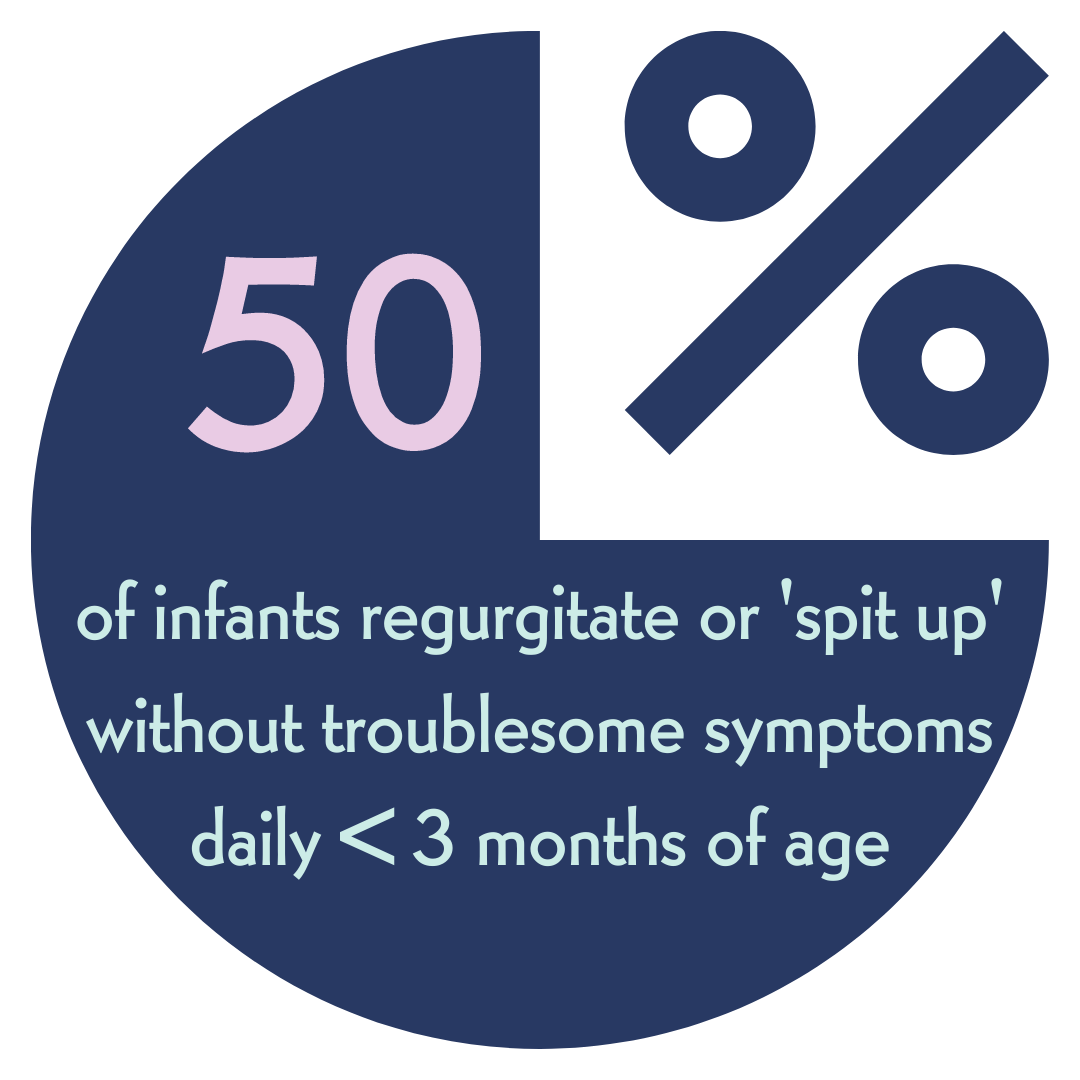
Gastroesophageal Reflux (GOR) is a normal physiological process in healthy babies, children and adults when the gastric contents make their way back up into the oesophagus. It happens in infants more frequently due to the immaturity of the lower oesophageal sphincter.
Gastroesophageal Reflux Disease (GORD) is defined as when the reflux causes troublesome symptoms or complications. GORD can also be present even when there are no obvious signs of vomiting – often referred as ‘silent reflux’.
what are the signs of reflux?

when is reflux (GORD) a symptom of an allergy?
Reflux can coexist and be a symptom of an allergy as well as a standalone condition. The prevalence of allergies in under 3’s between 2.1% and 4.2%, with 90% of these caused by cow’s milk, soy bean, wheat, peanut, tree nuts and shell fish (Mayer et al., 2012).
What additional symptoms may be present?
In addition to the symptoms of reflux, babies with a possible gastrointestinal food allergy will display signs of:
- diarrhoea/constipation
- blood/mucus in stools
- abdominal pain
- feeding aversion
- perianal redness
- other common allergy symptoms including respiratory and skin
home treatment
If you notice your baby is struggling with reflux and suspect that it may be GORD instead of normal spit up, there’s a few treatments you can try at home before heading to the GP.

Feed in an upright position. Positioning is key whether you are bottle or breast feeding. For bottle fed babies this could be on your knees or arms, using a cushion or feeding pillow, or a bouncer. For breastfed babies use the upright feeding position or try laid-back nursing with a slight recline.

Feed little and often. Babies stomachs are small and easily filled so cannot take on too much milk in one go. Whilst they quickly expand during the early months, for an infant with reflux it can be troublesome to overload them too soon. Feeding little and often can help them digest what’s already in their stomach rather than bringing it back up. This reduces the pain and any subsequent symptoms.

Keep baby upright for 15-20 minutes after each feed. As well as feeding smaller quantities, you can also aid digestion by keeping your baby upright for around 15-20 minutes after each feed. This will mean you are far more likely to be able to put your baby down on their backs and they will be happy to sleep for a longer stretch.

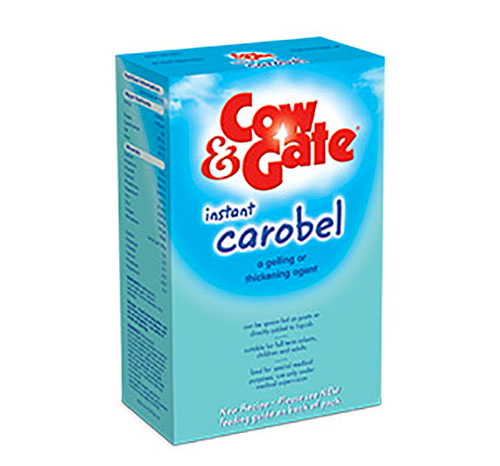
Add a thickener to feeds. Whilst anti-reflux formulas are great, if you are happy with the milk you are feeding your baby or you’re breastfeeding, then the switch may not be for you. Carobel is a thickening agent that works in all types of milk to reduce the amount of regurgitation.
Incline their sleep position. Babies with reflux tend to sleep better when the contents of their stomachs stay where they’re supposed to! Elevate your baby’s head above their feet, but ensure the mattress itself stays flat (even if not horizontal) – your baby’s spine must never be hunched or curved in any way. Some cribs and side sleepers have the functionality to adjust the height at one end. If you have a static cot/crib you can use sleeping wedges under the mattress, or books under the base/feet at one end.

medical treatment
If symptoms are difficult to manage with home treatment, it’s worth seeking further advice from a GP. There is still some confusion among health professionals as to whether reflux and/or CMPA is over/under diagnosed so use your instincts about your baby’s symptoms and behaviour when deciding whether to treat or not to treat. You can use the MAP guidelines to help you understand symptoms and the diagnosis pathway, which can give you confidence ahead of an appointment.
Medical treatment depends on the diagnosis and whether or not your baby is suffering from GORD alone, or as a result of an allergy. Medication such as omeprazole or ranitidine may be prescribed. These often take 2-4 weeks to start making a difference so seek help as quickly as you can once you think you’ve tried everything you can at home. An elimination diet if breastfeeding, or switching to a hypoallergenic formula may be suggested if CMPA is suspected. In my experience, infant Gaviscon is often the initial go to for reflux, but this often leads to severe constipation so watch out for signs if this is the route you are recommended.
Seldom do health professionals advise that babies should be placed prone (onto their front) for sleeping and only ever in severe cases of reflux is this advised, so never place your baby on their front to sleep unless advised to do so by a specialist.
I have a wealth of experience with babies with reflux, and can fully empathise just how difficult a start to life as parents it can be. If you’re struggling with sleep either due to suspected or diagnosed reflux, I offer a free 15 minute assessment call so get in touch if you want to chat more about any issues you’re having, and find out if and how I can help. It can be very common for babies to have lingering behavioural sleep issues following reflux, even once the symptoms are long gone.
You can also sign up to the HushaBoo email updates to be the first to find out about future blogs. Or follow HushaBoo on social media…
Blogged by Emma Osborne, Paediatric Sleep Specialist, founder of HushaBoo & Mum to one little boy who suffered with reflux due to CMPA so I know how you feel!

Reflux & allergies

Recent Comments